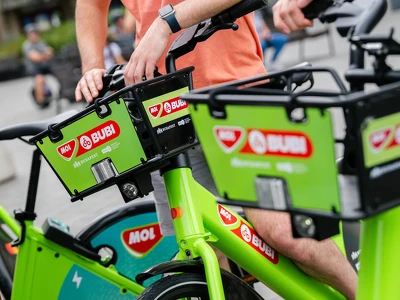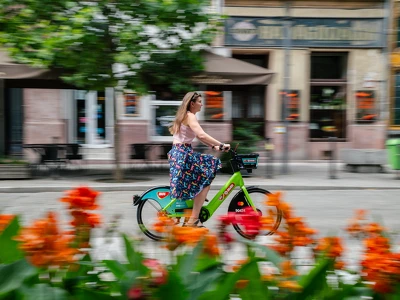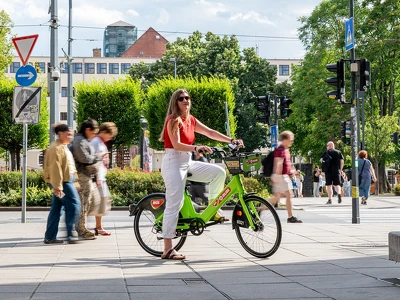

Budapest, 3 August 2026 – The public bike-sharing system has performed well in recent weeks: with a new service provider, a new app, and brand-new bikes—including electric-assist bicycles—the new generation of MOL Bubi has launched in Budapest. The number of bikes is steadily increasing, and starting this autumn, MOL Bubi bikes will also be available for pickup and drop-off at Mobi-points.
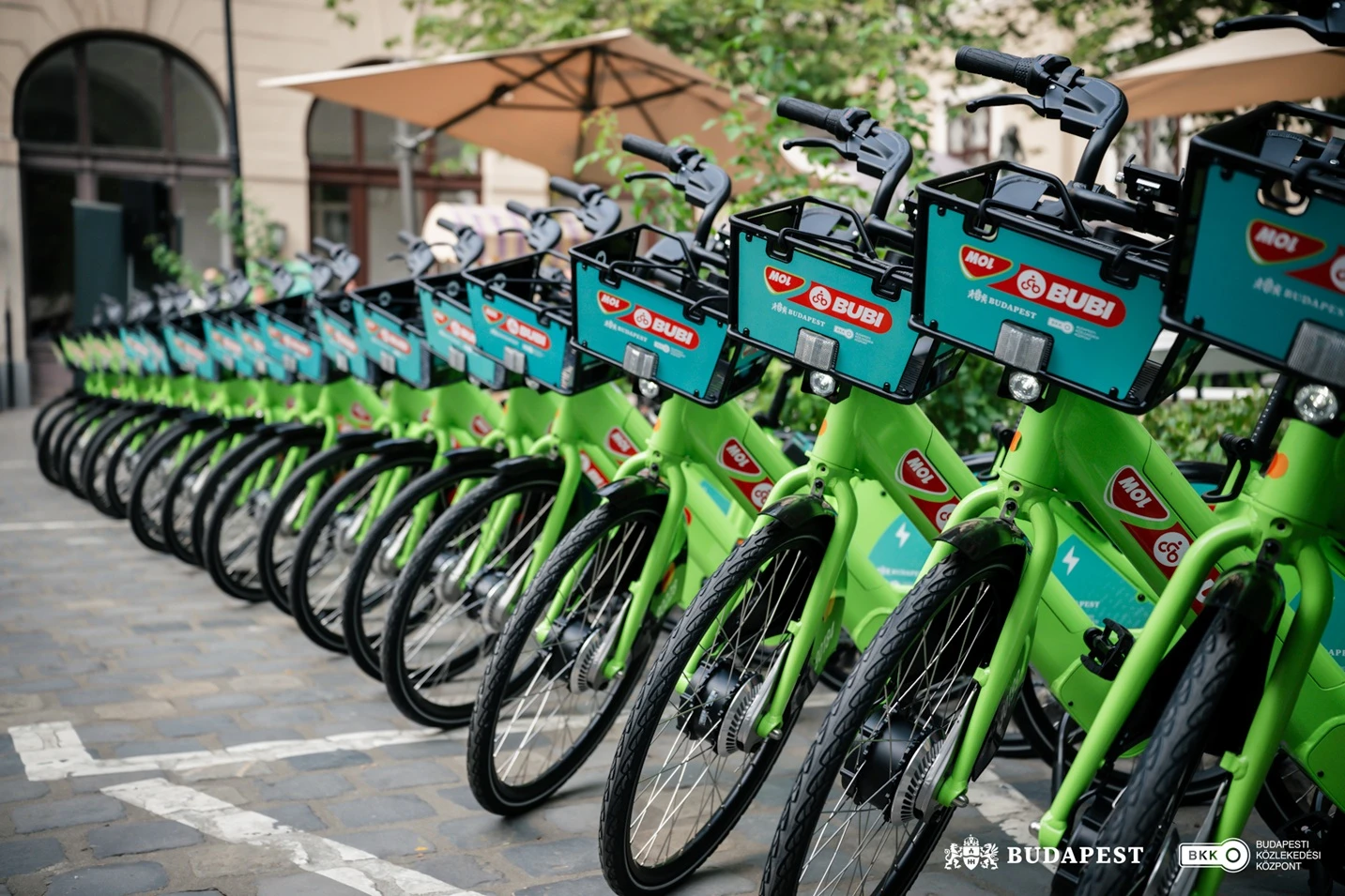
The revamped MOL Bubi service launched in Budapest on 3 August 2026. The new generation of MOL Bubi represents a step forward for users in every respect: a larger, flexibly expandable fleet of new bikes—including electric-assist bicycles—will be available to users.
Following the official launch, BKK will continuously increase the number of bicycles; after the initial period, it will provide a total of 3,300 bikes (2,500 classic and 800 electric-assist), and capacity is expected to grow further in the future according to plans. By 2027, an estimated 5,000 new bicycles will be available in an expanded service area, with more frequent coverage and at many more pickup points. However, the service can be expanded on an even larger scale: BKK’s goal is for the system to operate with up to 8,000 bicycles in the future, provided the necessary resources are available, ensuring even broader coverage and better access for Budapest residents.
Gergely Karácsony, Mayor of Budapest, said at the launch event of the new MOL Bubi that the new MOL Bubi represents a significant advancement for Budapest’s public bike-sharing system in terms of both quality and quantity. “On this very day, when we are facing our greatest challenges due to the effects of climate change, we are taking another important step toward a greener and more sustainable Budapest.”
The mayor thanked the participating partners and the residents of Budapest not only for their patience but also for the ever-increasing use of MOL Bubi bikes.
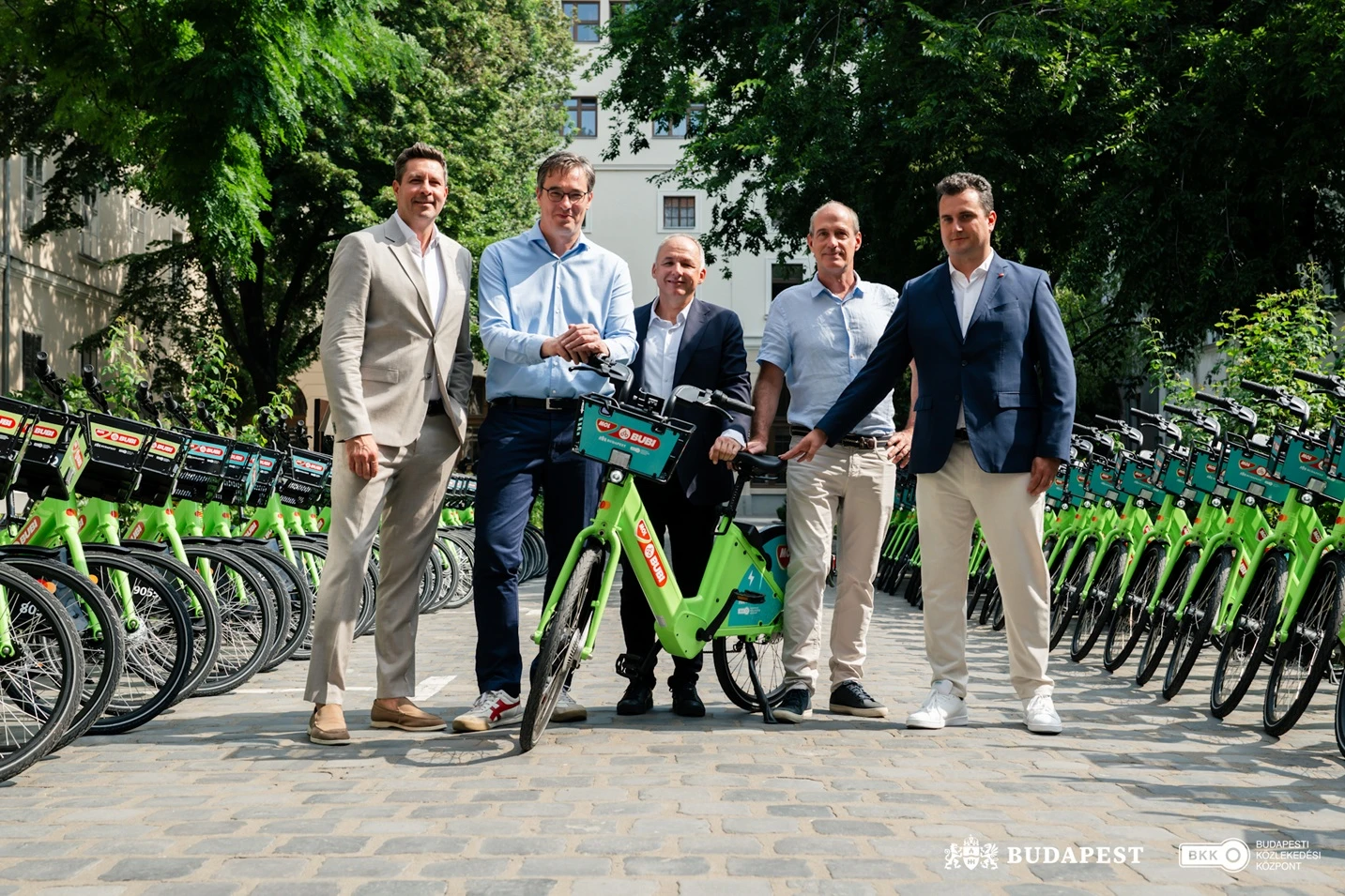
In the photo, from left to right:
- Péter Pantl, MOL’s Director of Communications and Marketing
- Gergely Karácsony, Mayor of Budapest
- Ádám Bodor, Deputy CEO for Mobility at BKK
- Damien Vander Heyden, Business Development Director at Inurba Mobility
- Balázs Győrffy, Business Development Director responsible for Hungary and Slovenia at Mastercard
The public bike-sharing system takes a step forward
The history of MOL Bubi began 12 years ago; the system’s evolution has served as a catalyst for urban cycling habits and for the transformation of Budapest’s streets and roads into more bike-friendly environments. For many people, the public bike-sharing system has been the gateway to urban cycling over the past decade or so, with an increasing number of people of all ages cycling in the capital city. And these distinctive bikes are now an integral part of the Budapest streetscape.
The second generation of MOL Bubi, launched in 2021, has become one of the BKK’s greatest success stories to date: following a radical overhaul of the original system, the number of trips increased 5- to 8-fold; over the past 5 years, the public bikes have been rented a total of 14 million times, and BKK customers have cycled more than 28 million kilometres on MOL Bubi bikes.
The current upgrade marks another milestone in the use of MOL Bubi: some of the bicycles are electrically assisted, allowing the system to serve an even broader user base and making cycling attractive even on longer routes and in hilly terrain.
Users Put MOL Bubi to the Test
During the trial period, nearly 9,000 users tested the system. BKK continuously collected feedback, and testers played a major role in fine-tuning the system.
“The trial period proved that users are very open to electric-assist bicycles. The new fleet brings the freedom to choose between modes of transportation to even more people; even those who were previously deterred from cycling by small or large inclines—or simply by distance—can now hop on a bike. Public transport in Budapest is complete with the public bike-sharing system, as evidenced by the unique, ever-growing success of MOL Bubi, encouraged by the MOL Bubi discounts offered to public transport pass holders,” said Ádám Bodor, Deputy CEO for Mobility at BKK, on the occasion of the relaunch of the system. The development of MOL Bubi will continue in the future: both the bike fleet and the service area will expand significantly. The service area, which currently covers approximately 40 square kilometres, could grow to 80 square kilometres in the next phases of development and, in the longer term, could even exceed 110 square kilometres. Thanks to the new electric-assist bicycles and the expanding network, even more parts of Budapest will become quickly and conveniently accessible by public bike, he added.
Strategic Partnership Supports the New System
MOL remains the title sponsor and strategic partner of Budapest’s bike-sharing service, having supported the initiative since Bubi’s launch in 2014.
“The best projects are those that prove, year after year, that they meet a genuine need. MOL Bubi has now become part of everyday life in Budapest, and the third generation proves that even a beloved service is capable of constantly reinventing itself. It is important for MOL to support mobility solutions that create real value and contribute to a more liveable, sustainable city,” said Péter Pantl, Director of Communications for the MOL Group.
Mastercard has joined the MOL Bubi public bike-sharing system as a digitalisation partner to help create a more convenient, secure, and seamless digital payment experience for urban mobility.
“The upgraded MOL Bubi service is a great example of how digitalisation is making urban transportation more convenient and accessible to everyone. At Mastercard, we’re working to make the reliable and easy-to-use digital payment experience available in more and more areas of everyday life, including urban transportation. A key element of this effort is the pilot operation of the Pay&GO bankcard ticketing system, which has been available on all Budapest metro lines since April of this year. “We are proud to support the next chapter in the history of MOL Bubi as a digitalisation partner,” – said Tibor Berkes, Head of Product Development for Hungary and Slovenia at Mastercard’s Central European Division.
The new public bike-sharing system, considered innovative even by international standards, is operated by Inurba Mobility, which also provides services in numerous other European cities. The contract, awarded through a public procurement process, is for a period of 5 years and may be extended for an additional 1.5 years. During this time – depending on available financial resources – the total number of conventional and electric-assist bicycles could reach as many as 8,000, thereby incorporating new areas into the system.
“Budapest is a unique city among the public bike-sharing systems we operate, as we are not launching a new service here, but rather further developing a system that has become a defining element of urban mobility in recent years. The new MOL Bubi offers users more options while providing greater flexibility in the system’s development: thanks to the Mobi-points, the network can be expanded quickly and efficiently, and the new app makes usage even simpler and more convenient. “Inurba Mobility’s goal is to make a bike available to Budapest residents whenever and wherever they need it,” said Damien Vander Heyden, Director of Business Development at Inurba Mobility.
Starting 3 August 2026, after downloading the new MOL Bubi app, anyone can use the MOL Bubi public bike-sharing system – including its classic and/or electric-assist bicycles – on a pay-as-you-go basis or with a Monthly pass or Annual pass available at a discounted rate. In addition, classic bicycles are available at a discounted rate for BudapestGO pass holders. The first 100 users to purchase an annual pass will receive a unique MOL Bubi sweatshirt as a gift.